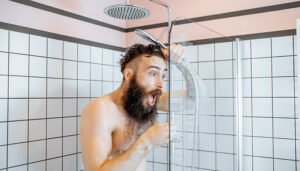
You’ve just stepped under the shower head on a brisk Perth morning, expecting a warm start to the day, only to be greeted by a bracing blast of ice-cold water. It’s a frustrating moment that immediately brings up concerns about expensive emergency repairs or potential safety hazards like gas leaks. If your hot water stopped working without warning, you aren’t just dealing with a cold shower; you’re facing a diagnostic puzzle where the symptoms often point to specific hydraulic, gas, or electrical faults.
Key Takeaways
- Identify whether you have a total loss of water flow or just a lack of heat to quickly narrow down the likely cause.
- Discover the safe “Five-Minute DIY List” you can perform at the switchboard or pilot light window when your hot water stopped working.
- Learn how Perth’s mineral-heavy water impacts your sacrificial anode and why sediment build-up leads to rumbling storage tanks.
- Understand the strict Western Australian licensing laws that dictate which repairs you can safely handle and when you must call a professional.
- Gain peace of mind by knowing how to spot signs of gas leaks or electrical faults to keep your home and family safe.
Immediate Steps: What to Do When Your Hot Water Stops
When you first realise your hot water stopped working, the initial impulse is often one of frustration or panic. Before you begin twisting handles or poking at the unit, take a moment to breathe. The most important rule is to avoid forcing any taps, levers, or valves that feel stiff, stuck, or corroded. Many Perth homes have systems located outdoors where they are exposed to the elements; forcing a seized valve can easily result in a snapped pipe and a much larger plumbing emergency.
Start by identifying the specific nature of the failure. Is there water coming out of the hot tap at all, or has the flow completely vanished? This distinction is the most vital piece of information you can provide when seeking professional help. You should also check multiple points around the home, such as the kitchen sink and the laundry, to determine if the issue is isolated to a single bathroom or if the entire property is affected.
The Flow Test: Cold Water vs. No Water
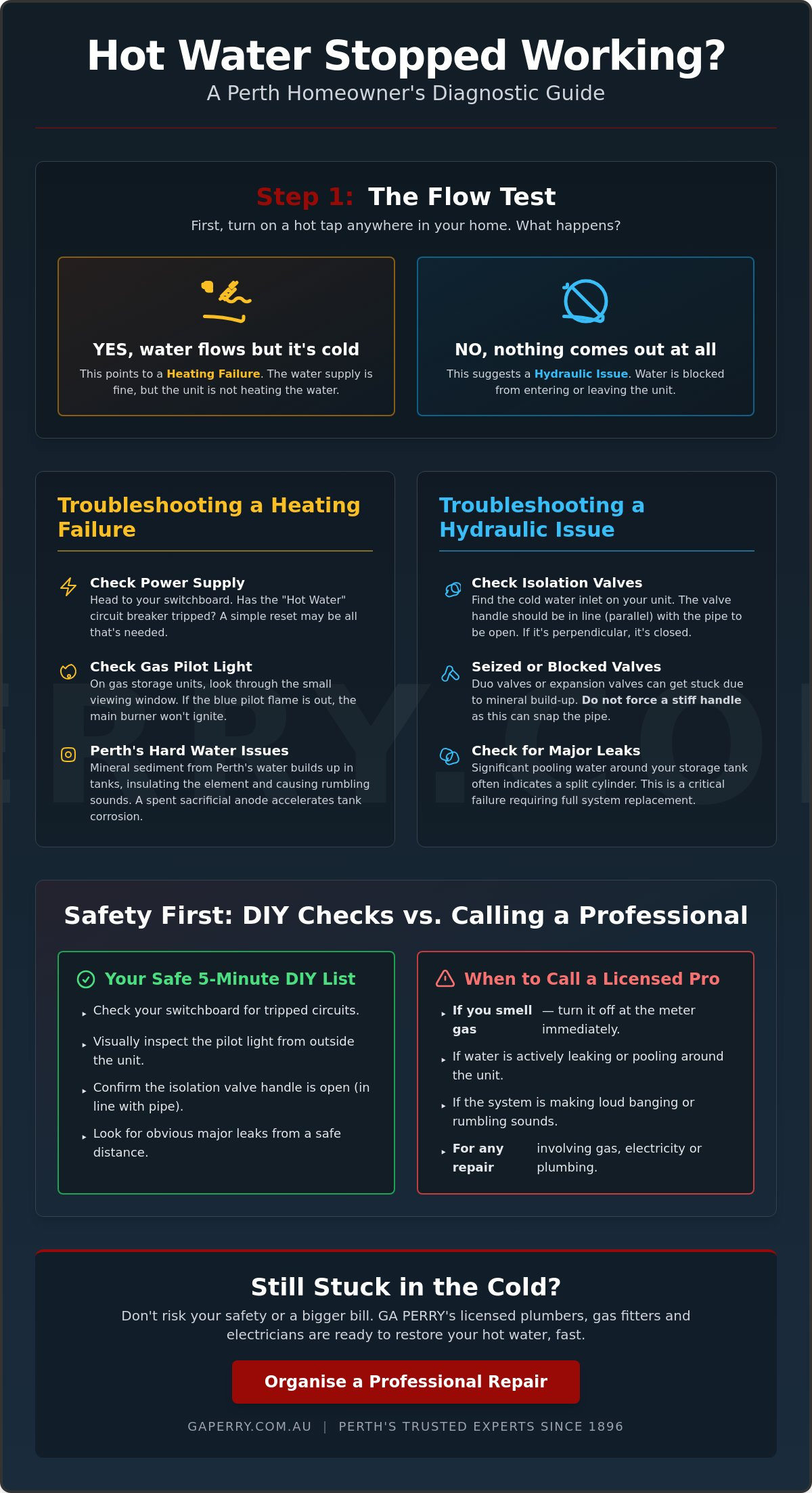
If you turn on the hot tap and a steady stream of cold water flows out, your system has likely suffered a heating failure. This suggests that the tank is full and the plumbing remains intact, but the energy source has been interrupted. In many Western Australian homes, a tempering valve is fitted to the hot water line to ensure water is delivered to bathrooms at a maximum of 50°C. If this valve fails, you might find your water is only lukewarm or stays completely cold despite the system working perfectly otherwise.
Conversely, if no water flows from the hot tap whatsoever, you are likely facing a hydraulic blockage or a closed isolation valve. To understand the mechanics behind these issues, it helps to know how water heaters work and how they rely on consistent pressure to move water through the heat exchanger or storage tank. A total lack of flow often points to a failed Duo valve or a cold water expansion valve that has seized shut.
Checking Your Utilities and Isolation Valves
Before assuming the worst, verify that your home’s basic utilities are functioning. Check your gas stove to see if the burners ignite or look at your electrical switchboard to ensure the “Hot Water” circuit or the main RCD hasn’t tripped. A simple power surge during a Perth storm is a common reason why a continuous flow system might lose its ignition sequence.
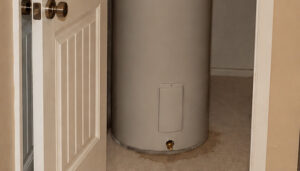
Next, head outside to the unit itself. Locate the cold water inlet, usually found at the base of the system. You will typically see a Duo valve (which combines a non-return valve and an isolation valve) and a cold water expansion valve. Ensure the handles are in the “on” position, usually aligned with the pipe. If you see significant pooling water around the base of a storage tank, this may indicate a split cylinder, which usually requires a full system replacement rather than a simple part repair.
Common Culprits: Why Hot Water Systems Fail in Perth
Perth’s water supply is unique, and unfortunately, it can be quite aggressive toward household plumbing. Many areas across the metropolitan region deal with “hard water,” which contains high levels of dissolved minerals like calcium and magnesium. When your hot water stopped working, the culprit is often a direct result of these minerals crystallising inside your tank. This sediment settles at the bottom, creating an insulating layer that forces the heating element or gas burner to work much harder. Over time, this leads to the “rumbling” or “popping” sounds you might hear as water trapped under the sediment boils and escapes.
Inside every storage tank sits a sacrificial anode, a metal rod designed to corrode so your steel tank doesn’t. In the harsh conditions of Western Australia, these rods typically expire every 5 to 10 years. Once the anode is spent, the minerals in the water begin attacking the tank walls, leading to rust, discoloured water, and eventually, a catastrophic leak. Understanding the lifespan and maintenance requirements of energy-efficient hot water systems is the first step in determining whether your unit needs a simple part replacement or if it has reached the end of its functional life.
Gas System Failures: Pilot Lights and Burners
Traditional gas storage units rely on a small, constant flame known as a pilot light. During a severe Perth winter storm, sudden downdrafts through the flue can easily extinguish this flame. If the pilot light is out, the main burner will never ignite, leaving you with a tank full of cold water. Another common failure point is the thermocouple, a safety device that shuts off the gas if the pilot light fails. If you struggle to relight the unit or notice a faint smell of gas, it is vital to arrange expert gas leak detection perth to ensure your family’s safety. Never attempt to dismantle gas valves or burner tubes yourself, as these require licensed calibration.
Electric System Failures: Elements and Thermostats
Electric systems face different challenges, primarily involving the heating element and the thermostat. A burnt-out element is a frequent reason why hot water stopped working in older electric units. This usually happens when sediment build-up causes the element to overheat and “pop.” You might also encounter “stacking,” where a faulty thermostat fails to regulate the temperature correctly, causing the safety cut-out switch to trip. If your switchboard continues to trip even after a reset, a comprehensive home electrical safety check is the most reliable way to rule out broader wiring faults. If the system is aged and showing signs of significant wear, a professional hot water system replacement is often the most reliable way to restore consistent warmth to your home.
Troubleshooting by System Type: Storage vs. Continuous Flow
The diagnostic path changes significantly depending on whether you have a large tank or a compact wall-mounted unit. If your hot water stopped working, understanding these specific mechanics helps you describe the fault accurately to a professional, which can often lead to a faster resolution. While both systems aim for the same result, their internal failure points are quite distinct.
Storage Tank Specifics: Leaks and Pressure
The Pressure Temperature Relief Valve (PTRV) is the most critical safety component on a storage tank. It’s designed to release a small amount of water during the heating cycle to manage internal pressure. If you notice a constant, heavy stream of water from this valve, it has likely failed or is reacting to a faulty thermostat. A small drip is normal; a steady flow is a fault.
Internal corrosion is another common end-of-life sign. If the water from your hot tap looks tea-coloured or smells metallic, the internal lining of the tank has probably breached. Once a tank has “given up the ghost” and rusted through, the only safe solution is a full replacement. You might also experience a version of the “cold water sandwich” in older storage units. This happens when the internal dip tube fails, causing incoming cold water to mix with the hot water at the top of the tank rather than being delivered to the bottom for heating.
Continuous Flow Specifics: Sensors and Filters
Continuous flow systems are essentially sophisticated computers. If the power supply is interrupted, the ignition sequence cannot start. No power means no hot water. Always check the external power point and look for error codes on the digital controller if your unit has one. A common issue Perth homeowners overlook is the inlet water filter. Because our local water can carry fine grit and minerals, this filter can become blocked, reducing the flow rate below the system’s activation point.
These systems require a minimum flow of water to trigger the burners. If you have a leaking tap repair Perth issue or a very restrictive water-saving showerhead, the unit may not realise you’ve turned the water on. This is a common frustration in households with older plumbing. Deciding between gas vs electric hot water systems often comes down to these maintenance nuances and how they handle Perth’s specific water pressure and flow requirements.
Safe DIY Checks vs. When to Call a Licensed Professional
Western Australia maintains some of the strictest trade licensing regulations in the country. This isn’t just red tape; it’s a necessary safeguard designed to protect your home from the catastrophic failures that can occur when high-pressure water, gas, and electricity are handled incorrectly. If your hot water stopped working, you need to be very clear about where your DIY capabilities end and where the law begins. Attempting uncertified repairs doesn’t just put your family at risk; it also voids your manufacturer’s warranty and can lead to your home insurance provider rejecting a claim if a leak or fire occurs.
The 2025 edition of the Plumbing Code of Australia, adopted in May 2026, mandates specific installation and maintenance standards that only a licensed professional can certify. While you might feel capable of swapping out a part, the law requires a compliance certificate for most hot water work. This ensures the system meets safety benchmarks, such as the mandatory 50°C delivery limit for bathrooms and the 60°C minimum storage temperature required to prevent bacterial growth. It is also worth noting that the same compliance standards apply to other bathroom fixtures; if you have noticed water pooling near your toilet base, a professional leaking toilet repair Perth service can address those issues under the same 2026 plumbing regulations to keep your entire bathroom compliant.
What You Can Safely (and Legally) Do
There are a few basic checks you can perform in under five minutes to rule out simple utility issues. Start at your electrical switchboard or meter box. Look for a tripped RCD or circuit breaker specifically labelled for the hot water system. If it has tripped, you can try to reset it once; if it trips again immediately, you have an electrical fault that requires a professional. For gas systems, you can visually inspect the pilot light window. If the flame is out, you may relight it yourself, provided you follow the manufacturer’s instructions usually printed on the inside of the access door. Finally, walk around the unit and check for obvious signs of pooling water or dampness on the ground, which helps you identify if the tank has breached.
When the “Seasoned Master” Must Take Over
Most technical repairs must be left to the experts. If the issue involves the internal wiring of an electric unit, such as replacing a burnt-out heating element or a faulty thermostat, you must engage a licensed electrician. Similarly, any work involving gas lines, burners, or control valves requires a licensed gas fitter. If the unit itself needs replacing, or if the tempering valve has failed, a licensed plumber is the only person authorised to carry out the work. Under the Plumbers Licensing Act 1995, even seemingly minor plumbing tasks such as expert leaking tap repair in Perth must be performed by a licensed professional to keep your home compliant and your insurance valid. If you’ve identified a major fault or a leaking tank, it is time to organise a professional hot water system replacement to ensure the job is done to code.
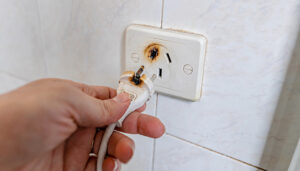
Always watch for critical red flags that demand immediate professional attention. If you smell the “rotten egg” scent of gas, turn off the main gas valve immediately and call for help. Other danger signs include scorched or melted electrical wires near the unit, or water spraying forcefully from the tank. These are not DIY situations; they are emergencies that require a disciplined, expert response to keep your property safe.
Restoring Your Hot Water with GA PERRY
When your hot water stopped working, the disruption to your household routine is immediate and stressful. In these moments, you need more than just a quick fix; you need the reassurance of a seasoned professional who has seen every possible system failure. GA PERRY has been providing hot water solutions to Perth homeowners since 1896, building a reputation as a stable and reliable institution. We understand that a domestic emergency requires a “safe harbor” response, which is why we prioritise disciplined service and technical excellence above all else.
Our approach is designed to be a comprehensive, one-stop solution. Because we employ a multi-trade team of licensed plumbers, gas fitters, and electricians, we can handle every aspect of your repair in a single visit. Whether the fault lies in a corroded heating element, a faulty gas valve, or a tripped RCD, our tradesmen have the breadth of expertise to diagnose and resolve the issue. We arrive in mobile workshops stocked with the most common parts, aiming to restore your comfort without the need for multiple call-outs or unnecessary delays.
Emergency 24/7 Hot Water Repairs in Perth
We provide a rapid response across the entire Perth metropolitan area to ensure no family has to endure freezing showers for longer than necessary. Our “On-Time or It’s Free” guarantee reflects our commitment to professional punctuality and respect for your schedule. When we arrive, we provide transparent advice on whether a repair is viable or if a full hot water system replacement is the more cost-effective long-term path. Every job we perform is strictly compliant with current AS/NZS 3500 standards, ensuring your system is safe, legal, and efficient.
Booking Your Service
You can reach out to us at any time of the day or night for immediate assistance with your hot water emergency. Every GA PERRY tradesman is background-checked, fully licensed, and highly experienced in the nuances of Perth’s unique water conditions. We take quiet pride in our work, focusing on consistent performance and time-tested methods rather than flashy communication. Contact GA PERRY now to get your hot water back today!
Secure Reliable Hot Water for Your Perth Home
Dealing with a cold shower is more than a minor inconvenience; it’s a significant disruption to your family’s daily rhythm. By distinguishing between a lack of water flow and a lack of heat, you’ve already taken the first step toward a professional solution. Remember that Perth’s mineral-rich water makes regular maintenance of your sacrificial anode and tempering valves essential for a long-lasting system. While simple checks of your switchboard or pilot light are safe, any technical fault or leak requires a disciplined, licensed approach to remain compliant with the 2025 Plumbing Code of Australia.
If your hot water stopped working, you don’t have to navigate the repair process alone. Since 1896, GA PERRY has served as a dependable guardian for local essential systems. We provide a 24/7 Emergency Service and back our work with an On-Time or It’s Free Guarantee. Get your hot water fixed today by Perth’s most trusted tradesmen; Book Now to ensure your system is restored safely and efficiently. You can rest easy knowing your home is in the hands of seasoned masters who prioritise your safety and comfort.
Frequently Asked Questions
Why is my hot water suddenly cold after a few minutes?
If your hot water runs cold quickly, it often indicates a broken dip tube or excessive sediment. The dip tube directs cold water to the bottom of the tank; if it snaps, cold water mixes with the hot water at the top. This results in a short burst of warmth followed by a cold shower. In Perth, mineral accumulation can also reduce the usable volume of the tank, causing you to run out of hot water much faster than usual.
Is it normal for my hot water system to leak a little bit of water?
A small amount of water dripping from the Pressure Temperature Relief (PTR) valve is perfectly normal during the heating cycle. This happens as the water expands while getting hot. However, if you notice a constant stream or a large puddle at the base, the valve has likely failed or the internal pressure is too high. If your hot water stopped working and you see significant leakage, it is time to have a professional inspect the unit.
Can I relight the pilot light on my gas hot water system myself?
You can safely relight a pilot light yourself by following the specific instructions printed on the inside of the unit’s access door. Most modern gas storage systems have a simple piezo igniter button similar to a BBQ. If the flame refuses to stay lit after several attempts, the thermocouple is likely faulty. This safety device requires professional replacement by a licensed gas fitter to ensure the system remains safe and operational.
How long does a typical hot water system last in Perth?
A high quality hot water system in Perth typically lasts between 10 and 15 years. However, our local “hard water” contains minerals that can accelerate corrosion if the sacrificial anode is not replaced every 5 to 10 years. Regular maintenance is the most effective way to extend the life of your unit. If your system is over 12 years old and starts failing, a replacement is often more economical than repeated repairs.
Why does my hot water take so long to reach the tap?
The delay is usually caused by the distance between your hot water unit and the tap. The “dead leg” of water sitting in the pipes must be pushed out before the heated water reaches you. In larger Perth homes, this can take a minute or more. You can improve this by insulating exposed pipes or installing a small recirculating pump, though these solutions should be discussed with a licensed plumber to ensure they meet local standards.
My hot water has stopped working; should I call a plumber or an electrician?
Choosing between a plumber or an electrician depends on the system type and the specific fault. Electric storage units often require an electrician for element or thermostat issues, while gas units and all pipework require a plumber or gas fitter. To avoid the confusion of calling the wrong trade, it is best to engage a multi-trade provider who can handle the plumbing, gas, and electrical components in a single visit to your home. This integrated service model is a hallmark of high-quality maintenance firms globally, such as plumbingboilerslondon.com, which specialises in comprehensive heating and plumbing solutions.
What is a tempering valve and why does it matter for my hot water?
A tempering valve is a safety device that mixes hot and cold water to ensure the temperature at your bathroom taps does not exceed 50°C. This is a mandatory requirement for all new installations in Western Australia to prevent scalding, especially for children and the elderly. If this valve fails, you might find your water is only lukewarm even though the tank itself is stored at the required 60°C to prevent bacterial growth.
Will a power outage affect my gas hot water system?
A power outage will immediately stop a continuous flow gas system from working because these units rely on electronic controllers and ignition sequences. Traditional gas storage systems with a standing pilot light are generally unaffected by blackouts and will continue to provide hot water. If your hot water stopped working during a storm, check your switchboard first to see if an RCD has tripped before assuming the unit has suffered a mechanical failure.