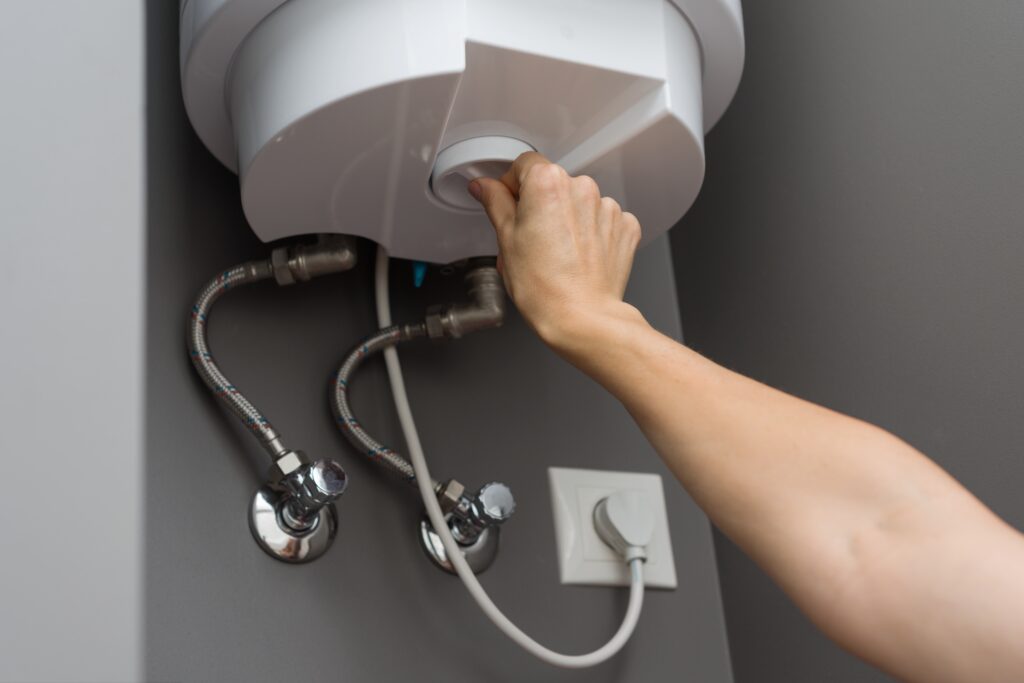
Your hot water system is one of the most overlooked decisions in your home…until something goes wrong, when the bill lands, or when you step into a cold shower at 6am. By then, the choice has already been made for you.
Australians spend between 15 and 25% of their household energy bill on hot water, depending on the state and the system. It’s one of the biggest ongoing costs in a home. And while most people focus on the type of system they install, the brand you choose plays just as important a role in performance, efficiency, lifespan, and maintenance costs over time.
And while most people focus on the type of system they install, the brand you choose plays just as important a role in performance, efficiency, lifespan, and maintenance costs over time. We cover what each one is good at, where it falls short, and who it suits, drawing on what we see every week across Perth homes.
Key Takeaways
- The most reputable hot water brands in Australia are Bosch, Dux, Rheem, Rinnai, Therman, Vulcan and Wilson. Each has a different sweet spot.
- Rheem is the most widely installed brand in Australia and has the deepest service network. Rinnai leads in continuous flow gas. Bosch is strong for compact and apartment installs. Wilson is an established WA favourite for electric storage.
- The real cost of a hot water system is the 10-year cost, not the price on the box. Efficiency, warranty and spare parts availability matter more than brand prestige.
- Match the brand and system to your household size, energy source and climate. A big family on mains gas needs a different setup to a two-person unit on rooftop solar.
- Professional installation by a licensed plumber is not optional. It protects your warranty, your safety and your compliance with Australian Standards.
Why the Brand of Your Hot Water System Matters
Hot water is one of the hardest-working appliances in any Australian home. It runs every day, often multiple times a day, for ten to twenty years. Every one of those cycles costs energy, wears components and eventually pushes the system toward replacement.
This is why the brand behind the system matters more than most people realise:
- Efficiency: Determines how much you pay to run the system every day. A more efficient brand can reduce ongoing energy use significantly over the life of the unit.
- Build quality: Influences how long the system will actually last before major components start failing.
- Warranty and after-sales support: Critical when something does go wrong. Some brands make repairs straightforward and affordable, while others turn a simple fault into a costly replacement.
- Spare parts availability: This is often overlooked, but it can be the difference between a quick fix and a full system replacement if parts are discontinued or hard to source.
We see it often. Two homes and two systems with systems installed around the same time, can have completely different outcomes!
Understanding Hot Water Systems in Australia
How a Hot Water System Works
Every hot water system does the same job in a different way. A heat source, whether it’s an electric element, gas burner, solar collector, or heat pump, is used to raise the temperature of cold incoming water to around 60°C. This is the standard safe storage temperature used in most Australian homes to prevent bacterial growth while still being practical for everyday use.
Once heated, the system delivers that hot water in one of two ways:
- In a storage system, the heated water is kept in an insulated tank until it’s needed. The tank continually maintains temperature, ready to supply hot water instantly when you turn on a tap or shower.
- In a continuous flow (or instantaneous) system, there is no stored water. Instead, water is heated on demand as it passes through the unit, meaning it only uses energy when you actually need hot water.
From there, regardless of the system type, the process is the same: the hot water is pushed through your plumbing and delivered to your taps, showers, and appliances.
The Five System Types You Will See in Australia
| System Type | Energy Source | Upfront Cost | Running Cost | Best Suited For |
| Electric Hot Water storage | Mains electricity (often off-peak) | Low to medium | Higher running cost on peak rates | Electric hot water systems are ideal for smaller homes, backup installs, off-peak users |
| Gas Hot Water storage | Natural gas or LPG | Medium | Lower than electric on peak | Gas hot water systems are ideal for medium households with gas connection, or homes looking for ongoing hot water |
| Continuous flow gas | Natural gas or LPG | Medium | Efficient (only heats on demand) | Space-conscious homes, growing families |
| Solar hot water | Sun + electric or gas boost | Higher upfront | Lowest long-term running cost | Sunny states, long-term owners |
| Heat pump | Electricity (pulls heat from air) | Higher upfront | Very low running cost | Energy-conscious homes, solar PV owners |
For a deeper walkthrough on the types and how they compare in Australian conditions, see our full breakdown on the common hot water systems used across Australia.

What Separates a Top-Tier Hot Water Brand From the Rest?
Every manufacturer claims quality. Very few actually prove it over time in real homes, under real demand, and through real failures. When we assess hot water system brands, there are six practical factors that consistently separate the top-tier performers from the rest.
- Energy efficiency and running costs. Star ratings on gas systems, and STC eligibility on solar and heat pump units, translate directly into your quarterly bill. A difference of one star can add hundreds of dollars to a decade of running costs.
- Durability and lifespan. A quality storage tank should last 10 to 15 years. A continuous flow unit should push 15 to 20. Brand build quality, especially tank lining and heat exchanger material, is the biggest variable.
- Warranty depth and after-sales support. A 10-year cylinder warranty is meaningless if the service network is thin. The best brands back their warranties with local technicians and fast turnaround.
- Spare parts availability in Australia. This is the one most buyers miss. If a sensor or valve fails and the part is on a three-week freight from overseas, you are showering cold. Brands with strong Australian distribution win here.
- Plumber and installer preference. Ask any licensed plumber which brands they would put in their own home. The answer is informed by hundreds of installs and repairs. It is worth more than any brochure.
- Innovation and smart features. Wi-Fi controllers, leak detection, app-based diagnostics and adaptive temperature control are now standard on premium ranges. Useful, but never the deciding factor on their own.
The Top Hot Water System Brands in Australia You Should Consider

1. Bosch
Overview:
Bosch is a German-engineered brand known globally for precision, efficiency, and compact design. In Australia, it has built a strong reputation around high-performance continuous flow gas systems that prioritise reliability and space-saving installation.
Product range:
Bosch focuses mainly on continuous flow gas systems (internal and external units), with select electric and heat pump options. Their systems are designed for compact installations, making them ideal for tighter urban properties.
Strengths:
- Strong track record on continuous flow gas reliability.
- Compact, wall-mounted units suit apartments, townhouses and courtyards.
- Efficient operation with good star ratings across the Highflow range.
- Reputation for build quality that justifies the price point.
Considerations:
- Narrower product range than Rheem or Dux, especially outside continuous flow.
- Premium pricing compared to budget-focused brands.
Best suited for:
Compact homes, apartments and renovations where space and efficiency matter more than tank capacity.

2. Dux
Overview:
An Australian brand since 1915, Dux is one of the most recognised names in local hot water systems. It has a strong domestic manufacturing heritage and a broad product range across every system type.
Product range:
Electric storage, gas storage, continuous flow, solar and heat pump. One of the most complete lineups on the market.
Strengths:
- Wide product coverage means there is a Dux unit for almost every scenario.
- Strong local parts and service network across Australia.
- Airoheat heat pump range is well-regarded for energy-conscious households.
- Competitive pricing relative to comparable specifications.
Considerations:
- Not always the outright leader in any one category, but consistently solid across all of them.
- Some older models can be noisier than newer competitor units.
Best suited for:
Homeowners who want a reliable Australian-made option with strong local support and flexibility across system types.

3. Rheem
Overview:
Rheem is arguably the most recognised hot water brand in Australia and has held that position for decades. It manufactures locally and has the deepest service network of any brand in the category.
Product range:
Complete coverage across electric, gas storage, gas continuous flow, solar and heat pump. Strong commercial as well as residential lineup.
Strengths:
- Widest service and warranty network in Australia. You are rarely far from a Rheem-accredited technician.
- Exceptionally strong spare parts availability, even for older models.
- Trusted by plumbers for predictable performance and straightforward installs.
- Solid warranty terms across most of the range.
Considerations:
- Popularity means more variation between the budget and premium ends of the range. Spec matters.
- Pricing can be higher than lesser-known brands for comparable units.
Best suited for. Most Australian households, especially buyers who value long-term serviceability and peace of mind over squeezing the lowest possible upfront price.

4. Rinnai
Overview:
A Japanese brand with a serious local presence, Rinnai is the go-to name in continuous flow gas. The Infinity range has become an industry benchmark.
Product range:
Dominant in continuous flow gas, with growing options in electric storage and heat pump. Strong smart controller ecosystem including the Control-R app.
Strengths:
- Infinity continuous flow units set the standard for reliability and temperature consistency.
- Excellent smart controller integration, including app control and temperature zoning.
- Strong energy efficiency across the gas range.
- Plumbers consistently rate Rinnai highly for ease of install and long-term reliability.
Considerations:
- Premium pricing, particularly on the top-end Infinity Enviro models.
- Best value is in gas. Electric and heat pump ranges are narrower.
Best suited for. Households with mains gas who want instant, consistent hot water and are willing to pay for best-in-class continuous flow performance.

5. Therman
Overview:
Therman is a value-focused brand that has carved out a solid position in the Australian continuous flow gas market. It delivers reliable performance at a more accessible price point.
Product range:
Primarily continuous flow gas units in a range of flow rates to suit small to medium households.
Strengths:
- Strong value for households wanting continuous flow without the premium price tag.
- Compliant with Australian Standards and backed by a serviceable warranty.
- Simple, stripped-back design that is easy to install and maintain.
Considerations:
- Smaller service network than Rheem or Rinnai.
- Fewer smart features compared with premium brands.
Best suited for. Budget-conscious buyers and investment property owners who want dependable continuous flow hot water at a sharper price.

6. Vulcan
Overview:
Vulcan is part of the Rheem family and has been a trusted workhorse brand in Australian homes for decades. Its strength is simple, durable, well-priced storage units.
Product range:
Electric storage and gas storage in a focused set of tank sizes. No bells. No whistles. That is the point.
Strengths:
- Simple, proven designs that are easy to service and repair.
- Shared Rheem parts network, so spares are easy to source.
- Competitive pricing across the storage range.
- Reliable performance for no-nonsense installs.
Considerations:
- No continuous flow, solar or heat pump options.
- Lower efficiency ratings than premium competitors.
Best suited for. Straightforward storage replacements, rental properties and buyers who want a dependable tank without paying for features they will not use.

7. Wilson
Overview:
Wilson is an Australian manufacturer with particularly deep roots in Western Australia. It is a familiar name to WA plumbers and a common sight on Perth rooftops and side courtyards.
Product range:
Known primarily for electric storage hot water systems in a range of capacities, with a focus on durability in hard-water conditions.
Strengths:
- Long-standing presence in the WA market with strong installer familiarity.
- Durable tank construction suited to local water conditions.
- Straightforward designs that are easy for local plumbers to service.
- Good availability of parts through WA distribution channels.
Considerations:
- Narrower national presence than Rheem or Dux.
- Primarily electric storage focused, so less relevant for gas or heat pump buyers.
Best suited for:
WA households replacing an electric storage system and wanting a locally-proven, easy-to-service brand.
Quick-Comparison Table: The Top Hot Water Brands at a Glance
| Brand | Product Range | Stand-Out Strength | Best Suited For |
| Bosch | Continuous flow gas, some electric and heat pump | Compact design, efficient gas units | Apartments, small homes, tight spaces |
| Dux | Full range (electric, gas, solar, heat pump) | Broad range with strong local service | Households wanting flexibility and Australian-made |
| Rheem | Full range, strongest service network | Unmatched service and parts availability | Most Australian homes, long-term value |
| Rinnai | Continuous flow gas (leader), some electric and heat pump | Best-in-class continuous flow gas | Gas-connected homes wanting premium performance |
| Therman | Continuous flow gas | Value-focused continuous flow | Budget-conscious and investment properties |
| Vulcan | Electric and gas storage | Simple, durable, easy to service | No-frills storage replacements |
| Wilson | Electric storage (primary) | WA heritage, local familiarity | WA homes replacing electric storage |
Not sure which brand fits your home?
Talk to a GA Perry hot water specialist for tailored advice based on your household, energy source and budget. Book a free consultation today.

How to Choose the Right Hot Water System Brand for Your Home
There is no single “best” hot water brand for every household. The right choice depends on how your home uses water, what energy sources you have available, and what kind of long-term value you’re aiming for. In practice, we see the same five factors consistently shape the right decision.
1. Household Size And Hot Water Demand
Your household size is the starting point for everything else. As a general rule, allow around 50 litres of hot water per person per day for normal household use.
For most families of four, this translates to either:
- a 250–315 litre storage tank, or
- a continuous flow system rated at 26 litres per minute or higher
Undersizing is one of the most common issues we see. It leads to inconsistent water temperature, system strain, and faster wear over time. Getting this part right often narrows your brand and system options immediately.
2. Climate
Where you live plays a bigger role than most people expect. In warmer, sunnier regions like Perth and much of Western Australia, solar and heat pump systems tend to perform very well due to higher ambient temperatures and consistent sunlight.
In cooler southern climates, however, heat pump efficiency can drop during winter, making gas systems a more stable and predictable option in many cases. The brand matters, but climate often decides the system type first.
3. Energy source availability
Before comparing brands, it’s essential to understand what energy sources your property actually supports.
- Mains gas connection? Opens up high-performance continuous flow systems from brands like Rinnai and Bosch.
- Rooftop solar PV? Improves the viability of electric or heat pump systems.
- Off-peak electricity tariffs? Can make storage systems more cost-effective over time.
This single factor often eliminates entire product categories. For example, a home without gas access won’t benefit from a Rinnai Infinity system, no matter how advanced it is.
4. Budget versus long-term value
Upfront cost is only part of the equation. The cheapest system on day one is rarely the cheapest over its lifetime.
A more accurate approach is to compare:
- Purchase price
- Estimated running costs
- Maintenance and servicing requirements
In many cases, a system that costs more upfront can pay for itself within a few years through lower energy bills and fewer repairs. This is where higher-quality brands often justify their positioning.
5. Installation space
Practical constraints matter just as much as performance.
- Large storage tanks (250–400L+) require dedicated floor space and suitable access
- Solar systems require roof space, orientation, and structural compatibility
- Continuous flow units are compact and wall-mounted but need both gas and electrical connections nearby
Even the best brand won’t work if the property can’t physically support the installation. The layout of your home often determines what is realistically possible before anything else.
Installation, Maintenance and Lifespan: What to Expect
Any hot water system will underperform if the installation is poor or the maintenance is skipped. This is the part most buyers underestimate.
Why Professional Installation Matters
In Australia, hot water system installation must be carried out by a licenced plumber, and any gas work requires a licenced gas fitter. This is a legal requirement, not a best-practice suggestion. It protects your warranty, your home insurance, and your safety. For gas systems, a gas compliance certificate is mandatory documentation that confirms the work meets Australian Standards.
Average Lifespan by System Type
| Hot Water System Type | Expected Lifespan |
| Electric storage | 10 to 15 years |
| Gas storage | 10 to 15 years |
| Continuous flow gas | 15 to 20 years |
| Solar hot water | 15 to 20 years (tank may need replacement earlier) |
| Heat pump | 10 to 15 years |
Servicing Keeps the Warranty (and the System) Alive
Most manufacturer warranties require regular servicing to remain valid. For storage tanks, this includes checking and replacing the sacrificial anode roughly every five years. For all systems, the temperature-pressure relief valve and other safety valves should be checked at the intervals specified by the manufacturer. For gas appliances more broadly, routine gas appliance maintenance keeps everything running safely and efficiently.
Signs Your System Is on the Way Out
❌Lukewarm water, or hot water that runs out fast.
❌ Rust-coloured or discoloured water from hot taps.
❌ Strange noises, banging or hissing from the unit.
❌ Water pooling around the base of the tank.
❌ Rising gas or electricity bills without a change in usage.
What You Will Actually Pay: A Cost Breakdown
Hot water system costs vary significantly by type and brand. As a rough guide for supply-only pricing across the brands in this guide:
- Electric storage systems typically range from around $900 to $2,500.
- Gas storage systems typically range from around $1,200 to $2,800.
- Continuous flow gas systems typically range from around $1,200 to $3,500.
- Solar hot water systems typically range from around $3,500 to $7,000 installed.
- Heat pump systems typically range from around $3,000 to $5,500, before any applicable rebates.
Installation adds to this and varies based on whether you are replacing an existing system, upgrading to a different type, or installing from scratch. Compliance work, pipe relocations, electrical upgrades and disposal of the old unit all factor in.
💡For a detailed walkthrough of the real-world numbers, see our guide on hot water installation costs.
Five Mistakes Homeowners Make When Choosing a Hot Water Brand
We install and replace hot water systems regularly. The same avoidable mistakes come up again and again.
- Buying on sticker price alone. The cheapest unit at the big-box retailer is almost never the cheapest over a decade. Efficiency and durability make the real difference.
- Underestimating household demand. An undersized system runs harder, wears faster and leaves the last person in the shower cold. Size up, don’t size down.
- Ignoring energy efficiency ratings. Star ratings matter. A four-star gas system versus a six-star unit is a real difference on your quarterly bill.
- Choosing the wrong system type for the property. A large storage tank in a compact courtyard home is a layout problem. A heat pump next to a bedroom wall is a noise problem. The property has a say in this decision.
- Forgetting installation compatibility. Does the property have a gas line to the right spot? Is the electrical supply adequate? Is the roof angled for solar? Answering these before you buy saves expensive surprises on install day.
The Bottom Line on Australia’s Top Hot Water Brands
There is no single best hot water system brand in Australia. There is only the best brand for your home. Rheem wins on service network and all-round coverage. Rinnai wins on continuous flow gas. Bosch wins on compact installs. Dux wins on range and Australian heritage. Wilson wins in WA for electric storage. Vulcan wins on simple, durable storage. Therman wins on value.
Match the brand to your household size, energy source, climate and budget, and any of these names will serve you well. Pick a unit that does not fit your home, and even a premium brand will disappoint.
The other half of the decision is the install. A quality unit fitted poorly is still a liability. A good unit fitted properly, serviced on schedule and repaired promptly when something goes wrong will quietly run in the background of your home for a decade or more, exactly as it should.
Speak to a hot water expert in Perth
GA Perry has been installing and servicing hot water systems across Perth for decades. Whether you are replacing an old unit or choosing your first, we will help you pick the right brand, the right size and the right setup, first time.
Explore our hot water services in Perth or get in touch for a no-obligation quote.