Finding a leaking hot water tank can quickly escalate from a minor inconvenience to a major household emergency. A small drip might become a substantial gush in just a day or two if left unchecked. Damage or failure of the pressure relief valve is the most common cause of water heater leaks.
Your hot water tank’s top leaks might indicate fixable issues with connections or valves. The situation becomes more concerning when bottom leaks occur, as they typically indicate tank corrosion. Many homeowners ask if they can repair a leaking hot water tank. The answer lies in pinpointing the leak’s exact source. A complete replacement becomes necessary if the leak originates from the bottom seam.
This piece outlines practical steps about what to do with a leaking hot water tank. You’ll learn to identify the leak’s source and decide between repairs and professional help. Replacement might be the budget-friendly choice for hot water systems that have been running beyond their typical 10-year warranty period.
Check for Signs of a Leak
You can detect a leaking hot water tank with a careful inspection. Small leaks often show subtle signs that need your attention, unlike major floods. Quick identification of these warning signals helps you avoid extensive water damage that can get pricey.
Look for puddles or moisture around the tank
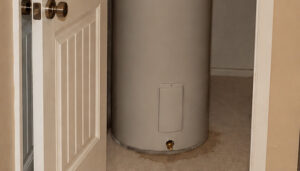
Water pooling around the base is the clearest sign of a leaking hot water tank. You should check even small water accumulations, as tiny drips might signal potential risks that need immediate action. Get close to your water heater and listen for dripping sounds until you find the source.
Unexplained dampness or puddles near your hot water system aren’t just annoying – they warn you that water is escaping. Take a flashlight to check the base, seams, and valves for moisture. The flooring around the unit might show discolouration, warping, or mould growth that points to ongoing leakage. Note that water isn’t always visible during inspection, so you need regular monitoring.
Rule out condensation or nearby sources
You should eliminate other moisture sources before concluding that your hot water tank leaks. Condensation can look like leaks, especially when cold water enters the tank and meets its warmer surface. This happens more in humid areas, creating moisture that looks like an actual leak.
Here’s a simple test to tell condensation from a real leak: wipe the tank and surrounding area dry with a towel and watch if moisture returns. Condensation is likely the culprit if the tank stays dry. With gas water heaters, turn off the gas control valve, wait several hours, and check for wetness – no water means it’s just condensation.
Check nearby systems that might cause water issues. Your HVAC system, water softener lines, or water supply pipes above or below the heater could leak. Small amounts of water from the pressure relief valve are normal, but constant discharge indicates trouble.
Inspect for rust or corrosion
Corrosion warns you about potential or existing leaks. Look for rust spots on your water heater, especially around fittings, valves, and the tank. These corroded areas show that metal parts are breaking down from constant moisture exposure.
Watch for discoloured areas or flaky patches on pipes connected to your hot water system – they usually mean aging parts are failing. When your hot taps run rusty or brown while cold water stays clear, your tank likely has internal corrosion. Wet insulation behind the door cover might mean the inner tank has corroded.
Cleaning and painting over small external rust spots can slow further damage temporarily. Notwithstanding that, visible rust often warns you that the tank’s integrity is compromised, which could lead to bigger leaks or complete system failure as corrosion continues.
Shut Off Power and Water Safely
A leaking hot water tank needs quick action to prevent potential risks. You must safely shut off both the power source and water supply to minimise damage and avoid electrical or gas-related dangers.
How to turn off an electric water heater
Water and electricity create serious safety risks with a leaking electric hot water system, so cutting power comes first. The original check should be for a dedicated power switch on or near the unit itself. Some models have this feature built in for maintenance.
Your main electrical panel (circuit breaker box) is the next stop if there’s no direct switch. You’ll need to find the breaker labelled “Hot Water,” “HWS,” or “Water Heater”. Switch this breaker to the OFF position. Some installations have a local isolator switch near the tank that you should also turn off if you see one.
Note that the tank stays hot for several hours even after cutting power. Make sure the circuit is truly off before you start any repairs around the unit.
How to shut off a gas water heater
Gas water heaters need careful shutdown steps to prevent gas leakage. You’ll find the gas control valve near the tank’s bottom. Turn this valve OFF to stop gas flow and put out the pilot light.
The gas pipe running into your system usually comes with a black colour and a yellow handle that shows it’s a gas line. The emergency shutoff valve should be within five feet of the gas valve to meet code requirements. Turn the valve handle until it sits perpendicular to the pipe to close the gas supply completely.
Double-check that both the pilot light and main burner flame are out. Never work on the water heater if you smell gas after these steps. Leave your home right away and call your gas supplier or a licensed plumber if this happens.
Turning off the cold water supply
Whatever type of water heater you have, you must stop the water supply to control the leak. The cold water isolation valve sits on the pipe that feeds into the tank’s bottom or top.
Turn this valve clockwise (“righty-tighty”) until it stops completely. This stops new water from entering the tank and keeps the leak from getting worse. To check if you’ve shut off the water supply properly, turn on a hot water faucet in your home and wait a few moments – no water should flow.
The main water supply might be your last option if you can’t find the dedicated shut-off valve or if it’s stuck. You’ll usually find the main shut-off near your water meter, where the main line enters your house.
These safety steps let you find the leak’s exact source with less risk of property damage or injury. Quick action with a leaking hot water tank saves your home from water damage.
Find the Source of the Leak
You need to find the exact spot where your hot water tank is leaking to decide between repairs and replacement. The best way to check starts with shutting down your system safely. A step-by-step check will show you where water escapes from the tank.
The hot water tank is leaking from the top
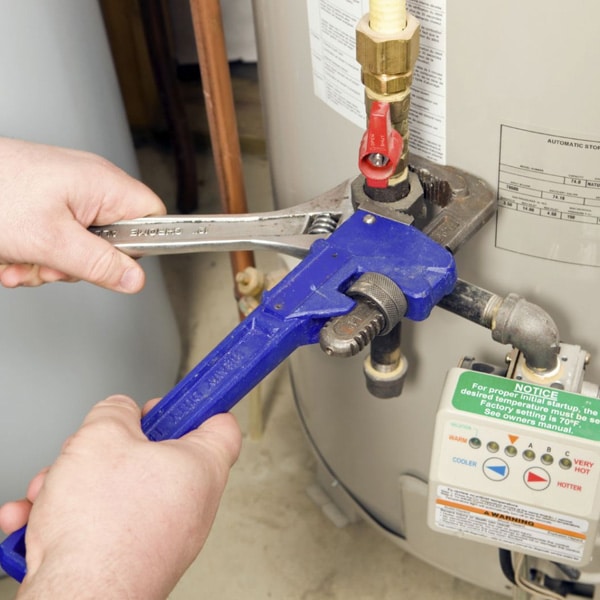
A leak at your tank’s top usually means you can fix the problem without replacing the whole system. Loose inlet and outlet connections are often the cause. You can tighten these connections with a pipe wrench in most cases.
The temperature and pressure relief (T&P) valve sits near most tanks’ tops and often causes leaks. This safety feature releases extra pressure, but it can leak nonstop when it fails. The valve needs replacement if water leaks where it connects to the heater.
Your tank might also leak from the anode rod port if the rod oxidises. This creates a bigger issue because it shows the protective rod has worn away. Your tank becomes vulnerable to internal damage. You should get a professional to look at it quickly since the tank might be breaking down inside.
The hot water tank is leaking from the bottom
Bottom leaks are usually more serious than top ones. Water collecting under your heater might mean tank failure, but you should check other possibilities first.
The drain valve near the tank’s bottom can leak and look like tank failure. Look for moisture around the valve or its opening. A simple clockwise turn to tighten the valve might solve your problem.
Sediment buildup inside the tank creates another issue. Minerals from water settle at the bottom over time and can create small cracks as trapped water gets too hot. Regular flushing helps prevent this, but built-up sediment eventually leads to tank failure.
Sometimes what looks like a leak is just condensation. This happens with older systems or when the thermostat runs too high. Turn off the power and wait several hours – if the “leak” stops, you’re dealing with condensation.
Check valves, fittings, and seams
Your tank’s smaller parts need attention, too. The pressure relief valve deserves a close look – it should release small amounts of water sometimes as a safety measure. Constant water flow means you need to repair or replace it.
Look at pipe connections for corrosion or loose spots. Rust or dampness around pipes shows bad connections. Sometimes tightening fittings with a wrench stops the leak, but heavy corrosion means you need new parts.
The tank’s seams between vertical ribs can develop stress fractures. These seams hold the inner lining, and failing seams let water get into the tank’s structure. Check these spots for moisture or wear that shows structural problems.
Last, check your system’s tempering valve if it has one. This safety device controls water temperature at the outlet. Its seals can wear out or corrode and cause leaks.
Can the Leak Be Repaired?
The repair options for a leaking hot water tank depend on which part is failing. Knowing what you can fix and what needs replacement helps you make better decisions about your next steps.
When a valve or fitting can be fixed
Valve and connection leaks are usually the easiest to repair. You might just need to replace the temperature and pressure relief (T&P) valve if it drips or leaks around its threads. This valve is vital because it opens to release water that exceeds safe pressure or temperature limits. Loose connections at pipe joints often need simple tightening to stop leaks. The drain valve might just need a few lever lifts to clear blockages. If water keeps running after that, you’ll need a new valve – a cheap fix compared to replacing the whole system.
Signs that the tank itself is damaged
Some problems show that your tank is beyond repair. Wet insulation behind the door cover usually means your inner tank has rust or corrosion. Rust-colored hot water (while cold water stays clear) points to tank deterioration inside. The most worrying sign is water pooling around the tank base, which shows the tank structure has failed. Rust in the inner tank means patches won’t work – they’re just band-aids that don’t fix why it happens. Your only safe option then is to replace the tank.
Temporary fixes vs permanent solutions
You should know the limits of quick fixes. Minor external rust can be cleaned and painted over to slow down damage for a while. These short-term solutions just buy time before you need a new system. Repairs to the tank itself rarely last long, especially with bottom leaks from corrosion. Industry experts say DIY repairs on internal parts don’t work very well and could void your warranty or insurance.
When to call a licensed plumber
You need professional help right away if your water heater leaks, can’t keep water hot, or gives you discoloured water. Licensed plumbers have special tools like pressure tests and thermal imaging to find problems you can’t see. Professional work becomes necessary for repairs involving gas lines, electrical parts, or the tank’s internal structure. DIY repairs on these systems can break Australian plumbing codes and void warranties and insurance. This could cost you a lot in liability.
Repair or Replace the Water Heater
A leaking hot water tank needs quick attention, and homeowners must choose between fixing it or getting a new one. This vital decision depends on various factors that affect both immediate costs and future benefits.
Factors to think over before replacing
Your water heater’s age plays a big role in this decision. Standard systems usually work well for 10-15 years, and electric models might last even longer. When water heaters reach this age range, buying a new one makes more sense than repairs that can get pricey. Repair costs that exceed half the price of a new unit suggest replacement as the smarter choice. Constant breakdowns or rusty water are clear signs that the system is beyond repair.
Choosing between a tank and a tankless system
Standard tank heaters store hot water all the time. They cost less to buy but just need more upkeep. Tankless systems heat water as you use it and last up to 20 years – much longer than traditional 10-15 year tanks. While tankless models cost more upfront, they shine with easier maintenance, endless hot water supply, and space-saving design. Electric water heaters tend to outlast gas models, whatever type you pick.
Energy efficiency and long-term savings
New energy-efficient models offer substantial savings over time. Heat pump systems cost more upfront, but they work three times more efficiently than regular electric heaters. Solar systems tap into free sunlight to cut running costs dramatically. Many areas provide rebates when you upgrade to energy-efficient systems, which helps offset the higher purchase price. Switching from an old electric storage tank to modern options could save you hundreds each year.
Conclusion
A leaking hot water tank needs quick action and a careful look. In this piece, we’ve seen how a small drip can turn into a major water damage headache if you ignore it.
Your safety comes first when you tackle any water heater problems. You need to shut off both the power and water connections to avoid electrical hazards and limit water damage. Once these are secure, a full picture will help you decide between repairs and replacement.
Your leak’s location tells you a lot about how bad the problem is. Top area leaks usually point to fixable problems with connections, valves, or fittings. But water pooling under the tank often means serious issues like tank corrosion or failure – and that means you’ll need a full replacement.
Your water heater’s age is key in deciding whether to repair or replace it. Units close to their 10-15 year lifespan usually need replacement instead of repairs that might get pricey. It also needs replacement if you see recurring problems, rusty water, or internal tank damage.
Getting a replacement is a chance to think about more efficient options. Tankless systems cost more upfront but last longer and might cost less to run than regular tanks. Heat pump and solar options are great choices for homeowners who care about the environment.
Note that while you can fix some minor issues yourself, you’ll just need professional help for problems with gas lines, electrical parts, or tank damage. Licensed plumbers have the know-how and tools to fix these issues safely.
Quick action on a leaking hot water tank stops major property damage and keeps hot water flowing in your home. Whether you fix it or replace it, taking care of the problem quickly is the best move you can make.
Don’t wait for a small leak to turn into a major issue. Contact our friendly team here at G.A. Perry today for prompt, professional hot water system repairs or replacements across Perth. Our licensed plumbers are ready to restore your hot water quickly and safely.
FAQs
Q1. Is a leaking hot water tank considered an emergency?
A leaking hot water tank should be treated as an urgent issue. While not always an immediate emergency, it can quickly escalate into one if left unattended. Prompt action is necessary to prevent potential water damage and more serious complications.
Q2. Can I still use hot water if my water heater is leaking?
You may still have access to hot water temporarily, but it’s not advisable to continue using a leaking water heater. The leak can worsen rapidly, potentially leading to more extensive damage or safety hazards. It’s best to shut off the power and water supply to the tank until it can be properly assessed.
Q3. What should I do first when I discover my hot water tank is leaking?
The first steps are to shut off the power supply (electricity or gas) to the water heater and turn off the cold water supply valve. These actions will prevent potential electrical hazards and minimise water damage while you assess the situation or wait for professional help.
Q4. How can I determine if my water heater needs repair or replacement?
The decision between repair and replacement depends on factors such as the age of the unit, the location and severity of the leak, and the overall condition of the tank. If your water heater is over 10 years old or the leak is coming from the tank itself, replacement is often the best option. For newer units with leaks from valves or connections, repair might be possible.
Q5. Are there energy-efficient alternatives when replacing a water heater?
Yes, there are several energy-efficient options available when replacing a water heater. Tankless systems, heat pump water heaters, and solar water heating systems can offer significant energy savings compared to traditional tank models. While these options may have higher upfront costs, they can provide long-term savings on energy bills and often have longer lifespans.