There’s something satisfying about tackling a home project yourself. Whether it’s fixing a leaky tap, repainting a room, or installing a new fixture, DIY can feel like a rewarding (and cost-effective) way to stay on top of things around the house.
But when it comes to gas fitting, it’s a completely different story.
Gas systems are complex, and the risks involved can be life-threatening. In Australia, gas fitting work must legally be carried out by a licenced professional, and for good reason. A small mistake, a loose connection, or an incorrect installation can lead to serious consequences, including gas leaks, fires, explosions, and even poisoning.
Licenced gas fitters have the training, tools, and legal certification required to ensure your system is compliant, properly tested, and safe for long-term use. In many cases, a gas safety certificate is the key to confirming everything has been installed correctly and meets current Australian regulations.
In this blog, we’ll break down exactly why gas fitting should always be left to the professionals, the regulations you need to be aware of, and what’s at stake when gas work isn’t done properly.
Key Takeaways
- Gas fitting is never a DIY job. It must be carried out by a licenced professional to meet Australian legal and safety requirements.
- Even small gas leaks can cause major danger, including fires, explosions, and carbon monoxide poisoning.
- Carbon monoxide is one of the biggest risks because it’s odourless and invisible, and faulty installation or poor ventilation can allow it to build up indoors.
- Australian gas installations must comply with AS/NZS 5601.1:2022, which sets strict rules for pipework, ventilation, appliance installation, and safety testing.
- Unlicenced gas work can lead to heavy fines, legal penalties, and serious liability, depending on your state or territory.
- DIY gas fitting can void your home insurance and appliance warranties, leaving you financially exposed if something goes wrong.
- Licenced gas fitters perform pressure testing, leak detection, ventilation checks, and compliance inspections to ensure systems are safe and gas-tight.
- Gas compliance certificates are often mandatory when installing, modifying, or replacing gas appliances and are important for property sales and rental requirements.
- Non-compliant gas work can reduce property value and delay inspections or settlement, especially if safety documentation is missing.
What is Gas Fitting And Why It Matters
Gas appliances make everyday life easier. They power everything from cooktops and heaters to hot water systems and dryers, giving Australian households reliable and efficient energy year-round. But while gas is incredibly convenient, it also comes with serious responsibilities.
Behind every gas appliance is a system of pipes, valves, regulators, fittings, and connections that must be installed and maintained correctly to stay safe. Even something as small as a tiny leak can become dangerous fast if it goes unnoticed, leading to fire risks, explosions, or exposure to harmful gases.
Gas fitting is the professional work involved in safely installing and maintaining these systems. It covers a wide range of operations, including the construction, installation, replacement, repair, alteration, maintenance, testing, and commissioning of any gas appliance or component connected to the supply. This includes everything downstream of the gas supply point, such as pipes, flues, fittings, controls, and appliances. Gas fitting work can even extend to gas appliances in caravans or vessels, as well as related building work such as roof flashing and sheeting required to install flues safely.
In practical terms, licenced gas fitters handle tasks like installing Type A gas appliances, ensuring correct ventilation, running LPG gas lines, and installing flues through walls, ceilings, and roofs. If a job affects the safe operation of a gas appliance or gas system in any way, it falls under gas fitting—and it must be done correctly.
Common Household Gas Systems in Australia
Most Australian homes rely on gas to power several key systems, including:
- Cooking appliances (stoves, ovens, cooktops)
- Hot water systems
- Space heaters and central heating
- Outdoor BBQs and patio heaters
Your gas system generally has three main components:
- The gas meter (which controls the flow of gas into the property)
- The pipe network (which delivers gas throughout the home)
- And the appliances themselves (which use burners or ignition systems). Each part needs to be properly installed, tested, and maintained to prevent dangerous faults.
Why Gas Safety Is a Top Priority
Gas fitting regulations exist for one simple reason: gas is extremely dangerous when handled incorrectly.
A minor installation mistake, poor ventilation, or faulty connection can lead to gas leaks that may cause fires, explosions, or carbon monoxide poisoning. Carbon monoxide is especially dangerous because it is odourless, invisible, and impossible to detect without specialised equipment. Exposure can cause serious illness and, in severe cases, can be fatal.
- Gas Leaks and Fire Hazards: DIY gas work often leads to faulty connections, and even a small leak can quickly fill your home with gas. This creates a serious risk of fire or explosion, sometimes triggered by something as simple as a light switch. While gas has an added smell for detection, it may already be dangerous by the time you notice it.
- Carbon Monoxide Poisoning: Poor gas installation can cause incomplete combustion, producing carbon monoxide, an invisible, odourless gas that can be fatal. Symptoms often start mildly (headaches, dizziness, nausea) but can quickly escalate into unconsciousness or death. Without professional testing, carbon monoxide leaks can go unnoticed until it’s too late.
- Voiding Your Home Insurance: Many home insurance policies require gas work to be completed by a licenced professional. If DIY gas fitting causes damage, your insurer may deny the claim, leaving you to cover the full cost. Appliance warranties may also become void if installation isn’t compliant.
- Legal Penalties and Compliance Issues: Unlicenced gas fitting is illegal in Australia and can result in major fines and legal action. Even if nothing goes wrong immediately, you may still be forced to pay for costly rectification work to bring the system up to standard. It’s not worth the financial or legal risk.
- Impact on Property Value and Long-Term Safety: Non-compliant gas work can create serious issues when selling your home or undergoing inspections. Buyers, building inspectors, and tradespeople may flag unsafe installations, leading to delays and expensive repairs. Worse still, hidden faults can remain dangerous for years, putting future occupants at risk.
This is why gas fitting is not something that should ever be treated as a DIY project. Licenced gas fitters undergo extensive training to manage these risks. They follow strict procedures, use specialised testing tools, and ensure every installation meets Australian safety standards.
In many cases, regulations also require ongoing servicing and testing. For example, gas heaters are often required to be inspected and tested by a licenced professional at least every two years, and gas fitters are legally obligated to take action if they discover unsafe installations. That includes making the system safe and informing the occupier of any faults.
Legal Requirements For Gas Fitting In Australia
Gas fitting in Australia is heavily regulated. Gas is classified as a high-risk service, meaning even small installation errors can have serious consequences. That’s why Australian laws clearly define who can carry out gas work, what standards must be followed, and what documentation must be provided once the work is complete.
AS/NZS 5601.1:2022 – The Main Standard Gas Fitters Must Follow
The backbone of gas fitting compliance in Australia is the AS/NZS 5601.1:2022 Gas Installations Standard. This standard replaced the previous AS 5601-2013 version and became widely adopted in September 2022.
It sets out the requirements for safe installation and operation of:
- Gas distribution systems downstream of the supply point
- Consumer piping systems
- Gas appliance installation and ventilation
- Flueing and clearance requirements
- Testing and commissioning procedures
Under legislation such as the Gas Safety Act 1997, gas fitting work must meet these standards unless an official exemption is granted.
State and Territory Licensing Rules
While AS/NZS standards apply broadly, gas licencing rules vary across states and territories. Each region has its own regulatory bodies and compliance requirements, but the principle remains the same: only licenced professionals are allowed to carry out gas fitting work.
For example:
- New South Wales (NSW) requires licensing for all gas fitting work, whether it’s residential, commercial, or industrial. This has been enforced under the Gas and Electricity (Consumer Safety) Act 2017 and supporting regulations since September 2018.
- Victoria (VIC) operates under the Building Act 1993 and Victorian Plumbing Regulations 2018, requiring licenced practitioners to issue compliance certificates and meet strict installation and performance standards.
- Queensland (QLD) also requires licensing and compliance certification and is preparing to roll out a new licensing and certification management system via the RSHQ Portal from February 2026. Queensland is notable for recognising some interstate licensing, whereas other states may have stricter local licensing requirements.
When a Gas Compliance Certificate Is Required
In many situations, a licenced gas fitter must provide a gas compliance certificate (also known as a gas safety certificate). This certificate confirms that the work has been completed legally, tested correctly, and meets all required safety standards.
A gas compliance certificate usually records critical details such as:
- The licenced gas fitter’s details and licence number
- Property address and inspection date
- Appliance details (make, model, and type)
- Test results, pressure readings, and system checks
- Confirmation that work complies with Australian Standards
This documentation is essential because it provides proof that the installation has been carried out correctly and safely.
Why Compliance Matters for Homeowners
From a homeowner’s perspective, these regulations protect your safety, your property, and your financial liability. Without licenced installation and compliance certification, you may face:
- Insurance issues if an incident occurs
- Legal liability if a gas fault causes harm
- Problems during property sales or building inspections
- Higher long-term risk of gas leaks or carbon monoxide exposure
Some certificates may only remain valid for a limited period depending on the state and application, and certain properties, such as rentals, may require regular gas safety checks every two years.
What Professionals Do During A Gas Inspection
In Australia, gas servicing and inspection work can only be completed by qualified and licenced professionals. These technicians undergo extensive training in gas safety, appliance standards, ventilation requirements, and compliance regulations.
1. Gas Leak and Pressure Testing
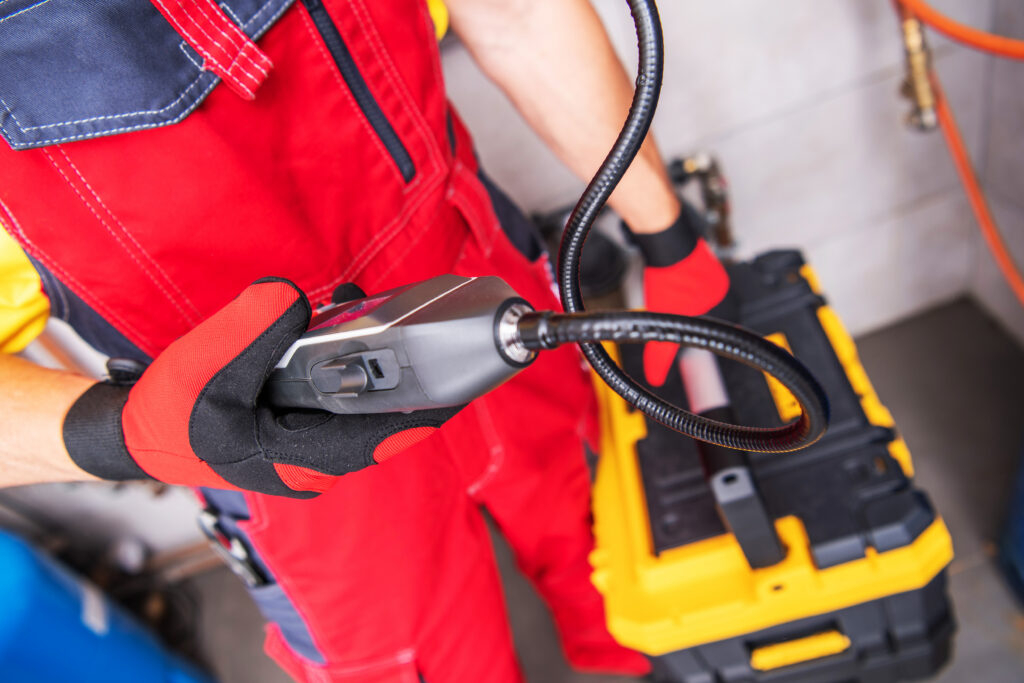
One of the most important parts of any gas inspection is pressure testing, which confirms the system is completely sealed and safe. This is typically performed after any installation, repair, alteration, or extension of a gas line.
During this process, the gas fitter will:
- Disconnect and depressurise the system
- Raise pressure to the required testing level
- Allow the system to stabilise
- Monitor pressure over a set period to detect any drops
Even the smallest pressure drop can indicate a leak, which must be addressed immediately. In some states, gas systems are required to meet strict “gas-tight” standards, meaning no leakage is acceptable.
2. Appliance Safety and Ventilation Checks
Gas professionals also inspect each appliance to ensure it’s functioning safely and efficiently. This includes checking ignition, burner performance, clearances, and signs of wear or unsafe operation.
A major focus is ventilation. Proper airflow is essential for safe gas combustion, and without it, carbon monoxide can build up indoors. Inspectors check for correct flueing, ventilation openings, and any warning signs of carbon monoxide spillage.
3. Issuing a Gas Safety Certificate
Once the inspection is complete and the system passes all required checks, the gas fitter can issue a gas safety certificate (or compliance certificate). This document provides proof that the gas installation has been tested and meets legal safety standards.
The certificate typically includes:
- The gas fitter’s name and licence number
- The property details and inspection date
- Test results and findings
- Confirmation the system complies with regulations
If a serious issue is found, the gas fitter is required to act immediately, whether that means repairing the fault, isolating the appliance, or disconnecting the gas supply to prevent danger. In high-risk situations, such as carbon monoxide leakage, the professional may also be required to report the issue to the relevant safety authority.
Don’t Gamble With Gas
When it comes to gas fitting, there’s no such thing as a “small” mistake. While DIY projects can be a great way to save money around the home, gas work is one area where cutting corners can lead to devastating consequences.
Beyond the safety concerns, unlicenced gas work can void your insurance, lead to serious legal penalties, and create major issues when it comes time to sell your property. That’s why gas compliance certificates matter to prove your system has been installed and tested correctly, and that your home meets all safety standards.
Book a Licenced Gas Fitter You Can Trust
Don’t take chances with gas. Whether you need a new appliance installed, a suspected leak checked, or urgent repairs after hours, GA PERRY is Perth’s trusted team for safe, compliant gas fitting.
From gas hot water systems and heaters to cooktops, ovens, BBQs, bayonets, and full gas pipework, we handle it all.Book today.