A toilet cistern is a household component you rarely think about. But, when something goes wrong, it can be an inconvenience that can’t be ignored for too long.
The good news is that most toilet cistern faults are simpler than they seem. In many cases, the problem comes down to just one of five internal components, and once you understand what’s failed, repairs can often be completed in under an hour with a few basic tools.
In this guide, we’ll walk you through how to fix a toilet cistern step by step, covering the most common issues such as constant running water, a cistern that won’t fill, a weak or incomplete flush, and leaks around the base. Each section is designed to help you quickly identify the cause and take practical action.
If you find the fault is beyond what you’re comfortable tackling, our Perth plumbers are only a phone call away and ready to help.
Key Takeaways
- Most toilet cistern problems come down to one of five parts: the flapper, the fill valve, the float, the overflow tube, or the tank seal.
- Shut off the isolation valve, empty the tank, replace the faulty part, and you are done.
- A running toilet can waste more than 200 litres a day, so treat it as urgent
- Nine out of ten running toilets are fixed by replacing the flapper valve
- Always turn off the isolation valve before opening the cistern
- If the porcelain is cracked, do not attempt a repair. Replace the unit
- In WA, any work on the pressure side of the plumbing must be done by a licensed plumber
How A Toilet Cistern Works
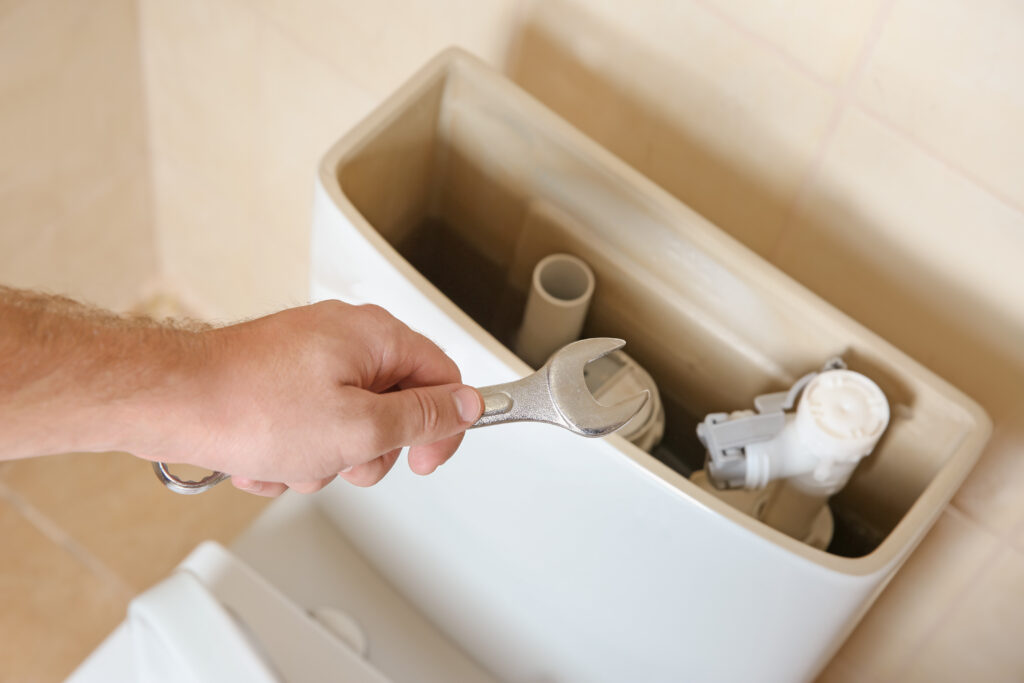
The cisterns in a surprisingly simple system that does a lot of the heavy lifting in a toilet. There are only a handful of moving parts inside, but each one plays a critical role. Once you understand what they do, diagnosing faults becomes much faster and far less frustrating.
There are 5 key components in a toilet cistern:
- Fill valve (inlet valve): refills the tank after each flush.
- Flush valve and flapper: the rubber seal at the bottom that lifts when you press the button, releasing water into the bowl.
- Float: either a ball on a rod or a float cup around the fill valve. It tells the fill valve when to stop.
- Overflow tube: the tall vertical pipe. If the water level rises above it, water drains into the bowl instead of flooding your floor.
- Flush handle or button: connected by a chain or lever to the flapper.
How A Toilet Cistern Works
You press the button. The flapper lifts. Water rushes from the tank into the bowl through the rim jets. The flapper drops back down once the tank empties. The fill valve opens, the tank refills, the float rises, and the fill valve shuts off. Four steps, one cycle.
When any of those steps goes wrong, you get one of the five faults below.
The 5 Most Common Toilet Cistern Problems
Find your symptom in the table, then jump to the relevant fix.
- Constant running water: If your toilet never seems to stop refilling or you can hear water trickling long after a flush, the cistern isn’t sealing properly. This is usually caused by a worn flapper, a stuck float, or a faulty fill valve that isn’t shutting off at the correct water level. Even a small seal issue can waste a surprising amount of water over time.
- Weak or sluggish flush: A flush that lacks power or doesn’t fully clear the bowl is often linked to insufficient water volume or restricted flow. The most common causes are a low water level in the cistern or limescale build-up in the rim jets, which reduces the force and distribution of water during flushing.
- Cistern will not fill: When the cistern doesn’t refill after flushing, the issue is usually related to water supply. In many cases, the isolation valve may be partially or fully closed, or the fill valve may be blocked with debris or sediment. This prevents water from entering the tank as it should.
- Tank overflowing: An overflowing cistern is a clear sign that the internal shut-off system has failed. This typically happens when the float is misadjusted or stuck, or when the fill valve is no longer responding correctly. If left unchecked, water will continue rising until it spills into the overflow tube or, in worst cases, outside the cistern.
- Water leaking at the base: Water pooling around the base of the toilet is often more serious, as it points to a seal or structural issue. The cause is commonly a degraded donut seal between the cistern and bowl, loose mounting bolts, or in some cases a cracked cistern tank. These leaks should be addressed quickly to avoid floor damage and hidden water waste.
Before You Start Fixing Your Cistern
Preparation goes a long way when it comes to cistern repairs. While they are simple systems, they don’t respond well to rushed or unprepared work. Having everything ready upfront means you can complete the repair in one go without interruptions, leaks, or unnecessary damage.
Tools You Need Before You Start
Gather these before you touch anything. Nothing kills momentum like a half-opened cistern and a trip to the hardware store.
- Adjustable wrench or shifter
- Phillips and flat-head screwdrivers
- Replacement flapper, fill valve, or donut seal (depending on fault)
- Old towel and a small bucket
- Sponge or cup for bailing out residual water
- Plumbers tape (PTFE tape) for thread seals
- Rubber gloves
Safety First: Shut It Off Properly
Skipping this step is how bathrooms get flooded. Five minutes of prep saves hours of cleanup.
- Find the isolation valve. It is the small tap on the wall behind or below the toilet, where the flexible hose meets the wall.
- Turn it clockwise until it stops. If the valve is stiff or the tap will not move, do not force it. A sheared valve turns a 20-minute job into an emergency callout.
- Flush the toilet. This empties most of the tank.
- Sponge out the rest. Use a cup or sponge to remove the water left at the bottom so you can see what you are doing.
- Lay a towel on the floor. Tiles and timber both hate drips.
The 3 mistakes that turn into a plumber callout
- Forcing a stiff isolation valve.
- Over-tightening bolts on the porcelain which cracks the tank.
- Using cheap pipe tape instead of PTFE, which fails within weeks.

How To Fix A Running Toilet Cistern (Step-by-Step)
This is the most common call we get, and the good news is most homeowners can solve it themselves. A running toilet usually points to a worn flapper, a misadjusted float, or a fill valve that will not shut off.
Step 1: Inspect the flapper valve
With the water off and tank empty, reach in and press down gently on the flapper. If the rubber feels hard, warped, or slimy with mineral buildup, it is the culprit. Flappers typically last five to seven years before they harden and stop sealing.
Step 2: Replace a worn flapper
- Unhook the chain from the flush lever
- Slide the flapper off the two pegs at the base of the overflow tube
- Take the old flapper to the hardware store to match the size and fitting (flappers are not universal)
- Hook the new flapper onto the pegs and reattach the chain, leaving about 15mm of slack
- Turn the water back on and test flush
Step 3: Adjust the float level
If the water is rising above the overflow tube and trickling into the bowl, the float is set too high. For a float cup (modern cisterns), pinch the clip on the adjustment rod and slide it down 10 to 20mm. For an old ball float, turn the screw on top of the fill valve clockwise to lower it.
The correct water level sits about 25mm below the top of the overflow tube.
Call GA PERRY if…You have replaced the flapper, adjusted the float, and the toilet is still running. That points to a failing fill valve or a deeper issue with the water supply. Our Perth plumbers handle it same day.
How To Fix A Cistern That Will Not Fill
If you flush and hear nothing, or the tank fills painfully slowly, the problem is almost always on the supply side.
Step 1: Check the water supply
Make sure the isolation valve is fully open (turn it anticlockwise). If you can hear water but the tank is not filling, check that the flexible hose is not kinked or crushed behind the unit.
Step 2: Clean or replace the fill valve
Perth is a hard-water city, and limescale buildup inside the fill valve is one of the top causes of slow or no-fill cisterns.
- Turn off the isolation valve and empty the tank
- Unscrew the fill valve cap (usually a quarter turn anticlockwise)
- Hold an inverted cup over the valve opening, then briefly turn the water on to flush out debris
- If the valve is still slow, replace the entire unit. Most fill valves cost $25 to $50 and fit with a single nut underneath the tank
Step 3: Free up a stuck float
A float cup can jam against the side of the tank or snag on the fill valve stem. Move it up and down manually. If it binds, clean the guide rod with a soft brush and white vinegar to remove mineral buildup.
How To Fix A Weak Or Sluggish Flush
A weak flush usually has nothing to do with the flush mechanism itself. The two real culprits are water level and blocked rim jets.
Step 1: Get the water level right
A flush relies on volume and gravity. If the water sits more than 30mm below the overflow tube, there is not enough mass to do the job. Adjust the float upward until the waterline reaches the fill mark on the inside of the tank (or 25mm below the overflow tube).
Step 2: Clear limescale from the rim jets
The rim jets are the small holes under the rim of the bowl through which water flows. In hard-water areas, they clog with limescale and drop flush power dramatically.
- Turn off the isolation valve and empty the tank and bowl
- Pour white vinegar into the overflow tube so it runs through the rim jets
- Leave it for 30 minutes, then clear each jet with a bent wire or old toothbrush
- Turn the water back on and flush to rinse
Step 3: Sort the handle and chain
If the chain between the flush lever and the flapper is too loose, the flapper closes too early. Too tight, and it will not seal at all. Aim for 15mm of slack. Replace broken plastic handles with a metal replacement, which lasts longer.
How To Fix A Leaking Toilet Cistern
A slow drip at the base can rot subfloors and stain tiles within weeks, so treat leaks as urgent.
Step 1: Pinpoint the leak
Dry the outside of the cistern and the floor. Put a few drops of food colouring in the tank and wait 20 minutes without flushing. Colour in the bowl means a flapper leak. Colour on the floor means a seal or bolt leak. Colour at the inlet means a faulty supply hose or washer.
Step 2: Replace seals and gaskets
The donut seal between the cistern and the bowl is the most common leak point on older toilets. To replace it, turn off the water, empty the tank, disconnect the supply hose, and unscrew the two or three bolts holding the cistern to the bowl. Lift the cistern off, flip it upside down, and swap the old donut seal for a new one. Reseat the cistern, tighten the bolts evenly in a cross pattern, and reconnect the supply.
Step 3: Tighten without cracking the porcelain
Porcelain cracks under uneven pressure. Always tighten bolts in small turns, alternating sides, until the cistern is snug. If you can still wobble it gently, it is tight enough. If you hear creaking, stop immediately.
When to stop and call a plumber: A leak that returns within a week, a cracked tank or bowl, water appearing through the ceiling below an upstairs toilet, or any job that requires touching the pipework behind the wall. In WA, pressure-side plumbing must be carried out by a licensed plumber.

Repair Or Replace?
Sometimes the smarter move is to replace the whole unit. Here is the rule of thumb to consider:
| Repair makes sense when… | Replace when… |
| The toilet is under 10 years old | The porcelain is cracked anywhere |
| One or two parts have failed | You have had three or more faults in a year |
| Parts are easy to source | It is a single-flush unit (dual-flush saves 40% water) |
| Total repair cost is under $150 | The cistern is older than 15 years |
Prevention To Keep Your Cistern Working Longer
A cistern that gets a quick once-over every few months will outlast one that gets ignored until it fails. Three habits make all the difference.
- Quarterly lid-off check. Lift the lid, flush once, watch the cycle. Anything hissing, sticking, or running too long gets investigated now, not later.
- Descale twice a year. Pour a cup of white vinegar into the tank, leave overnight, flush twice in the morning. Kills limescale before it affects the valves.
- Upgrade to dual-flush if you have not already. Modern 4.5/3 litre cisterns use less than half the water of older units, which is both cheaper and kinder during Perth water restrictions.
When To Put The Tools Down And Call GA PERRY
Most toilet cistern issues are well within DIY reach. But there are some situations where continuing to troubleshoot can cause more damage than the original problem. Knowing when to stop is just as important as knowing how to fix it.
If you come across any of the following, it’s time to step away from the tools and bring in a licensed plumber from GA PERRY:
- Cracked cistern or toilet bowl: Porcelain cannot be reliably repaired. Once it’s cracked, the only safe and long-term solution is a full replacement, not a patch or seal.
- Persistent leak at the base after replacing the donut seal: If water is still escaping after a new seal has been installed, the issue may be with alignment, flange damage, or unseen structural faults.
- Running water that continues after all parts have been replaced: If the flapper, float, and fill valve have all been changed and the cistern is still running, the problem may be in the inlet pressure or internal plumbing, not the visible components.
- Suspected leaks inside walls or under flooring: Hidden leaks are serious. They can lead to structural damage, mould growth, and costly repairs if not located and fixed early.
- Bathrooms on upper floors showing moisture below: Any sign of staining, damp patches, or dripping ceilings beneath a toilet should be treated as urgent and professionally assessed.
- Work involving pressure-side plumbing (WA licensing requirement): Anything that involves the pressurised water supply line must legally be handled by a licenced plumber in Western Australia.
If the issue appears to go beyond the cistern itself, especially where blockages are involved, or the fault seems deeper in the system, a CCTV drain inspection can quickly identify the cause without unnecessary excavation or lifting floors.
Final Word
Nine out of ten toilet cistern faults come down to a worn flapper, a misadjusted float, or a tired fill valve. All three are cheap, simple, and well within reach of any homeowner willing to spend half an hour with a screwdriver. Cracked porcelain, recurring leaks, and anything behind the wall is where DIY ends and licensed plumbing begins.
Need a Perth plumber?
For everything from a dripping cistern to a full bathroom fit-out, GA PERRY has been the trusted name across Perth for over a century. When something goes wrong, you need a team you can trust.