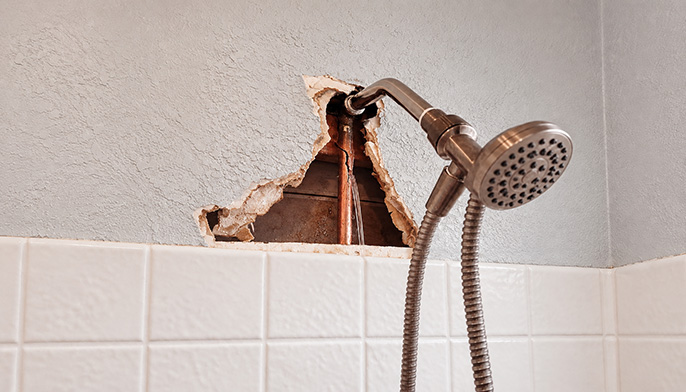
There are some noises around the house you can safely ignore.
The neighbour mowing the lawn at 6.30 on Sunday morning. The fridge making that weird noise it has made for three years. The kids insisting they definitely did not break something.
Water running inside a wall when nobody has a tap on is not one of them.
If you have discovered water pouring from a pipe, coming through a wall or making a determined run across the floor, the first few minutes matter. Knowing what to do when a pipe bursts can help you limit the damage before your plumber gets there.
First job? Find the mains and turn the water off.
You can worry about the wet carpet afterwards.
What to Do When a Pipe Bursts First
Find your property’s main water shut-off valve and turn it off.
That is the quickest way to stop more water feeding into the damaged pipe.
Once you have shut off the mains, open a tap to release some of the water and pressure still sitting in the plumbing.
Do not know where your mains shut-off is?
You are definitely not alone. Plenty of homeowners do not know until they are ankle-deep in water and suddenly extremely interested in the finer details of their plumbing system.
Once this particular drama is over, make a mental note of where it is.
Future you will appreciate it.
Water Near Electricity? Do Not Risk It
This is where a plumbing problem can become something much more serious.
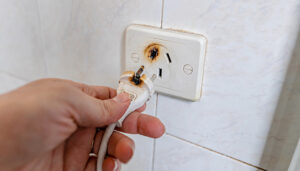
If water is running near power points, electrical appliances, wiring or your switchboard, do not start grabbing plugs or moving electrical equipment.
Water and electricity have never been particularly good housemates.
Keep clear.
If you can safely isolate the power without entering the affected area, do so. If there is sparking, smoke, electric shocks, fire or an immediate threat to someone’s safety, call 000.
For more information about electrical safety in Western Australia, visit Building and Energy WA’s electrical safety information.
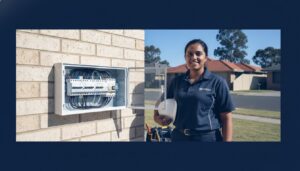
When you call GA PERRY, tell us if water has reached anything electrical. We handle both plumbing and electrical services in Perth, which is rather handy when your house decides to have two emergencies for the price of one.
Call a Plumber
Turning off the water does not fix the burst pipe.
It just stops things getting wetter.
When you call your plumber, tell them what you know. Where is the water coming from? Is the damaged pipe visible? Have you turned off the mains? Has water reached any electrical fittings?
You do not need to crawl under the house with a torch and conduct your own investigation.
That is our job.
You can supervise from somewhere considerably drier.
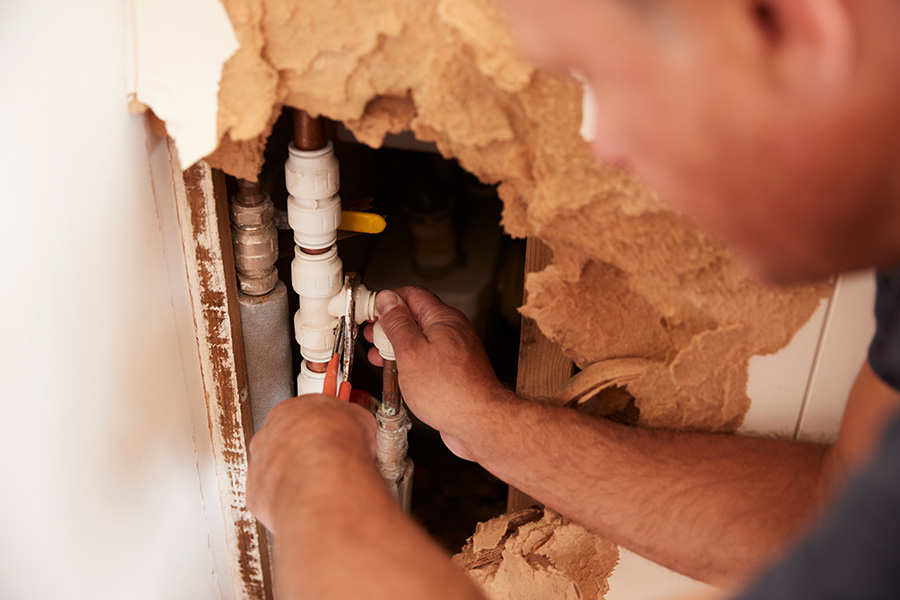
If you have discovered a damaged or leaking pipe, GA PERRY provides burst pipe repairs in Perth to locate the problem and repair the affected plumbing.
Save What You Can
Once the water is off and you are confident the area is safe, start moving things out of the way.
Furniture, electronics, rugs, boxes and anything else you do not particularly want soaking wet should be moved somewhere dry.
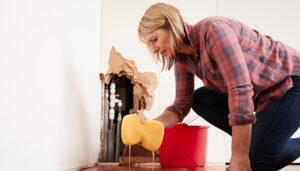
Then grab the towels, buckets and mop.
You are not trying to repair the pipe at this point. You are simply trying to stop the water that has already escaped from causing more damage.
And while duct tape has achieved some remarkable things over the years, rebuilding your household plumbing probably should not be one of them.
Put the tape down, MacGyver.
Take Photos Before Cleaning Everything Up
Before you completely attack the mess, grab your phone.
Take photos of where the water appeared, the affected room and anything that has been damaged.
If you end up making an insurance claim, having a record of what happened may be useful.
It only takes a minute.
Then you can return to your exciting new career in emergency water removal.
How Do You Know if a Pipe Has Burst?
Sometimes there is no mystery whatsoever.
There is water everywhere and you have found the culprit.
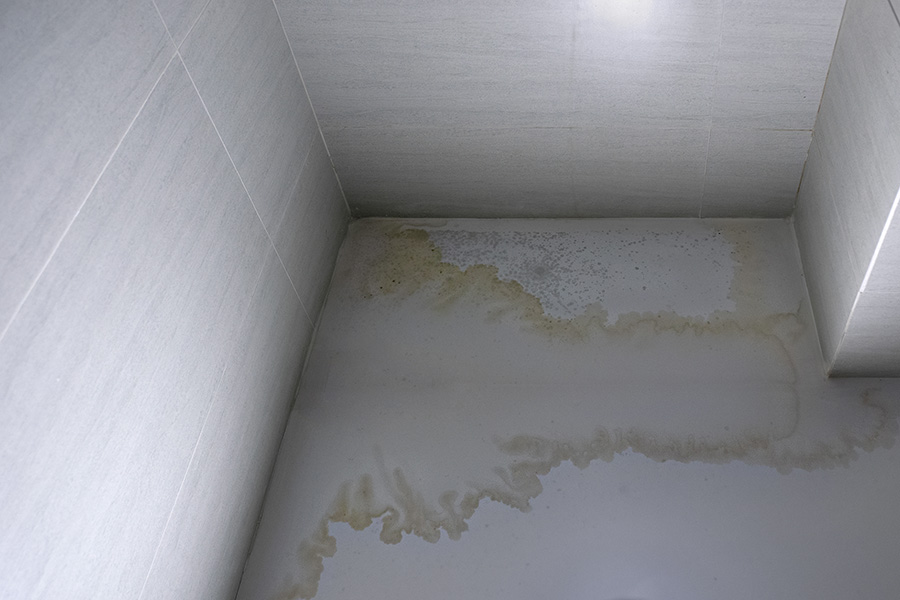
But burst and leaking pipes are not always that obvious. A damaged pipe inside a wall, ceiling or underneath the floor can leak for some time before you realise what is happening.
Things worth watching for include:
- Water stains appearing on walls or ceilings
- Damp or bubbling plaster
- A sudden drop in water pressure
- Puddles that do not have an obvious source
- Running water sounds when nobody is using water
- Damp or musty smells
- An unexplained increase in your water bill
- Water appearing around cabinetry or flooring
One damp patch does not necessarily tell you exactly where the leak is either.
Water travels.
Unfortunately, it rarely travels somewhere cheap and convenient.
The place where it finally appears might be nowhere near where the pipe has actually failed.
Why Do Pipes Burst?
Pipes do not usually fail for no reason.
Old pipework, corrosion, damaged fittings, excessive water pressure, accidental damage and general deterioration can eventually cause a pipe or fitting to give way.
Sometimes you will get a bit of warning.
Maybe the water pressure has changed. Perhaps you have noticed a small leak before. There might be unexplained dampness somewhere.
Other times a pipe simply wakes up and chooses violence.
Either way, recurring leaks and unusual changes to your plumbing are worth getting checked rather than waiting to see what happens next.
Because “let us see if it gets worse” is not our favourite plumbing strategy.
Spoiler alert. It often gets worse.
Can You Fix a Burst Pipe Yourself?
There are things you can do yourself.
Turning off the mains, keeping people away from electrical hazards, moving belongings and containing the water are all sensible steps.
Actually repairing the plumbing is different.
A temporary patch might slow a leak, but it does not tell you why the pipe failed in the first place or whether there is another problem nearby.
And if your repair involves duct tape, cable ties and saying “that will hold”, we would probably like a word.
Getting the damaged section properly inspected and repaired can save you from having exactly the same problem again.
Usually at 2 am.
Or five minutes before you are supposed to leave for work.
Pipes have impeccable timing.
What if the Burst Pipe Is Inside the Wall?
Resist the urge to start cutting holes in things.
We know. There is water coming out of the wall and making a hole seems like a logical next move.
But water showing up halfway down a wall does not necessarily mean the damaged pipe is directly behind that spot.
A plumber can work out where the water is coming from and determine how best to reach the damaged plumbing.
That is much better than turning a burst pipe into a burst pipe plus an unexpected renovation.
Your weekend has already taken enough of a turn.
Is a Burst Pipe Actually an Emergency?
It can be.
A burst pipe can damage flooring, walls, cabinetry, furniture and electrical systems surprisingly quickly.
If you cannot isolate the water, the leak is substantial or water is getting near electricity, you need to treat the situation seriously.
Even if you have successfully turned the mains off and everything suddenly seems calm, the problem has not disappeared.
You have stopped the water.
You have not fixed the pipe.
It is the plumbing equivalent of hitting snooze on the alarm.
What to Do When a Pipe Bursts
If you are standing there right now wondering what to do when a pipe bursts, keep it simple.
- Turn off the mains water.
- Keep away from anything electrical that has been affected by water.
- Call a licensed plumber.
- Move your belongings somewhere dry if it is safe to do so.
- Contain the water that has already escaped.
- Take a few photos of the damage.
- Leave the actual plumbing repair to someone who knows what they are looking at.
And resist the temptation to watch three YouTube videos and announce to the family that you are basically a plumber now.
Burst Pipe in Perth? Call GA PERRY
A burst pipe is one of those jobs that is much easier to deal with when you get onto it quickly.
GA PERRY provides plumbing services across Perth for burst pipes, leaking pipes and other plumbing problems.
If you have found a burst pipe, shut off the water if you can safely do so and give GA PERRY a call.
We will find out what has gone wrong, get the damaged plumbing sorted and help you get the water back where it belongs.
In the pipes. Not across your kitchen floor.